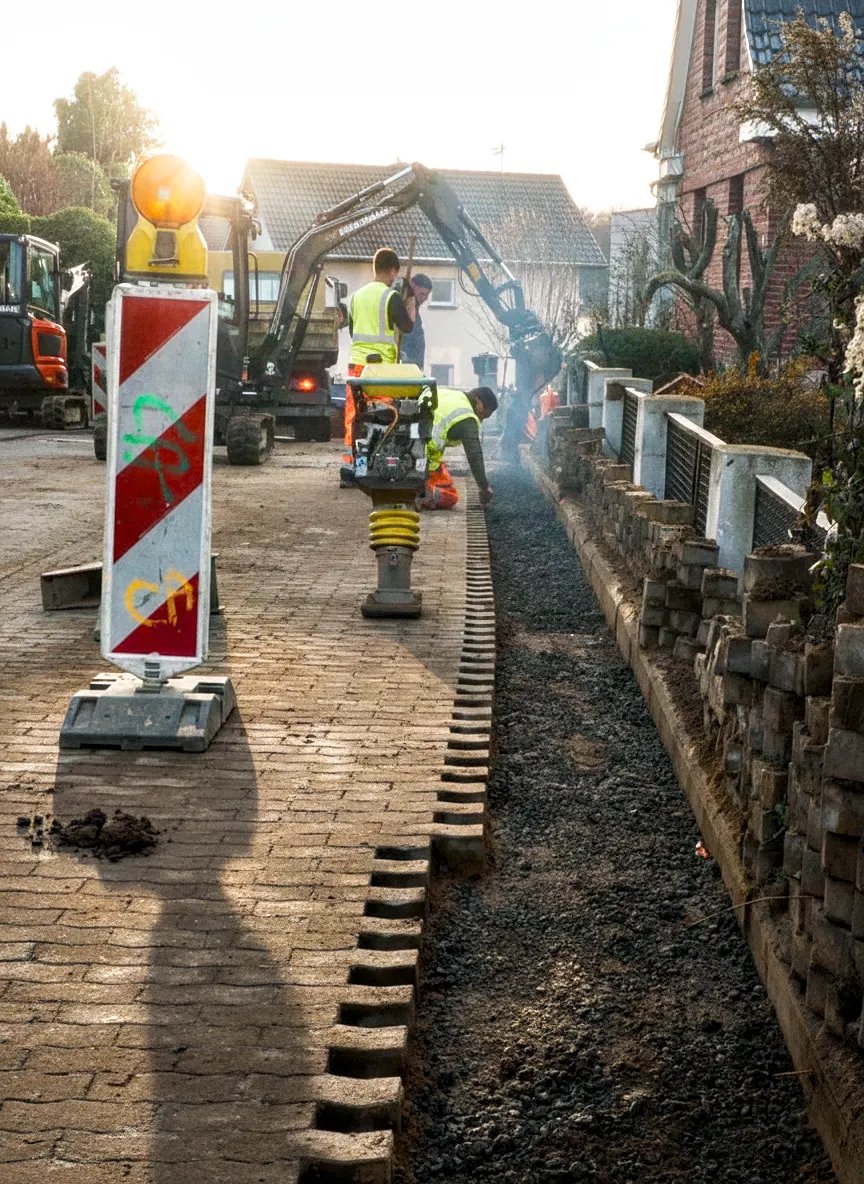
Barrier-free Development
Standard-compliant planning and implementation of barrier-free infrastructure according to the Disability Equality Act (BehiG) for public spaces.
Barrier-free as Standard
We plan and implement public traffic areas that are accessible to all people without obstacles. In doing so, we combine the legal requirements of the BehiG with technical feasibility and durable construction to ensure legally compliant approval.
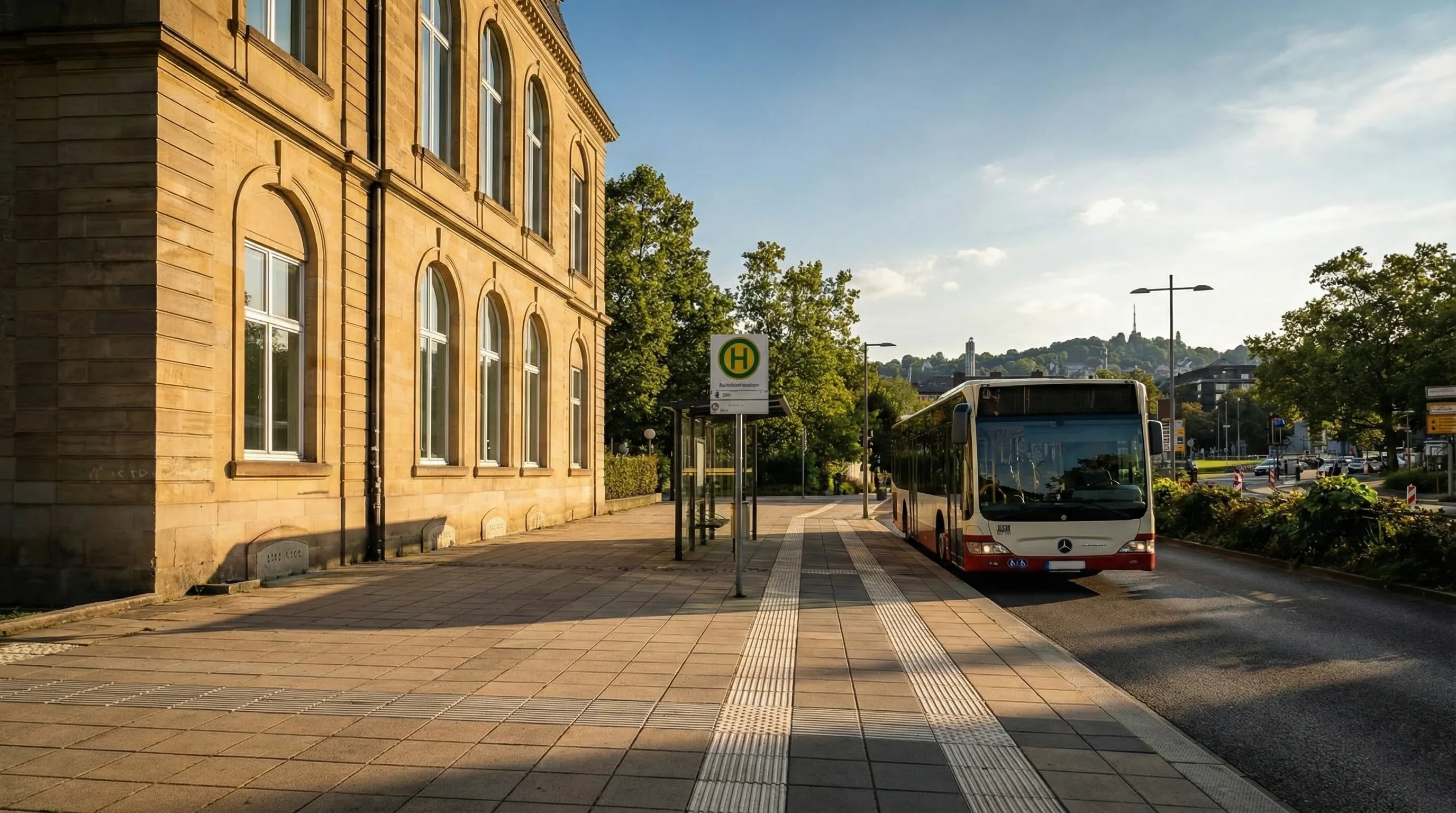
BehiG Implementation: Achieving Accessibility in 3 Steps
Precision in the millimeter range for unrestricted mobility.
Inventory & Analysis
We check the existing infrastructure for barriers. We accurately measure slopes, edge heights, and passage widths to define the necessary adjustment steps for a legally compliant redesign.
Standard-compliant Project Planning
In planning, we set the technical details—from the exact edge height for level access (e.g., at bus stops) to the placement of tactile guidance systems for visually impaired people.
Professional Execution
The construction implementation is carried out with the utmost accuracy, as even the slightest deviations in slopes or edges can already jeopardize accessibility. We ensure that the final result meets all legal requirements.
FAQ: Quick & Concise on BehiG
What are the most important structural elements?
The focus is primarily on the adjustment of curb edges (special curbs for buses), the adherence to maximum longitudinal and transverse slopes, as well as the installation of tactile floor coverings (stud and ribbed plates) for orientation.
Why is specialized planning so important?
The law specifies narrow tolerance ranges. Faulty planning or execution can lead to stops or paths not being accepted as barrier-free and needing expensive corrections.
Does the law only apply to bus stops?
No, the BehiG covers the entire public realm. This also includes publicly accessible paths, squares, parks, and access to public buildings and facilities.