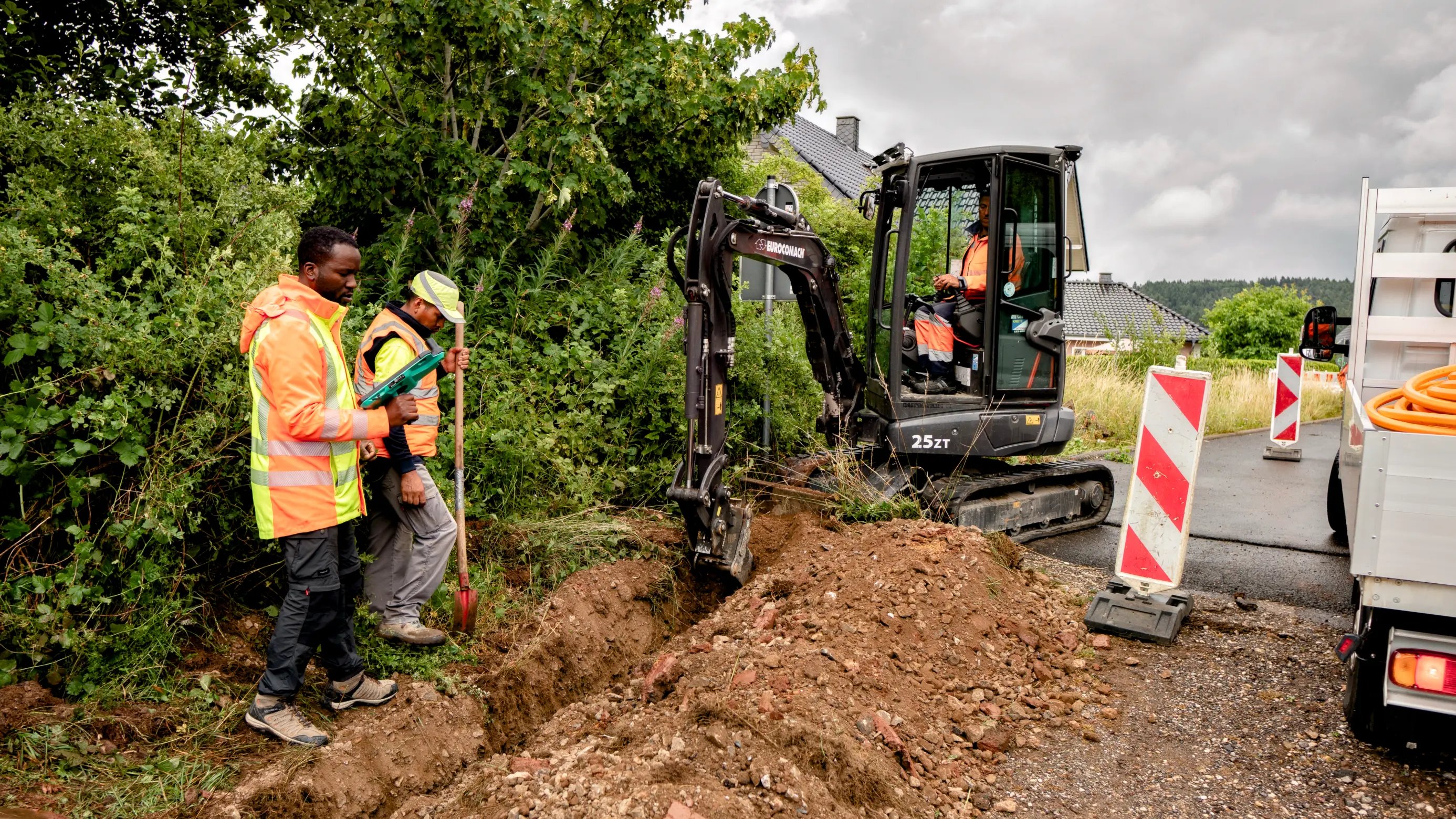
Pipeline construction
Proper installation of power, water, and data lines for a future-proof media supply and stable network infrastructure.
Proper development of modern supply networks
We implement the underground infrastructure for energy, data, and water.
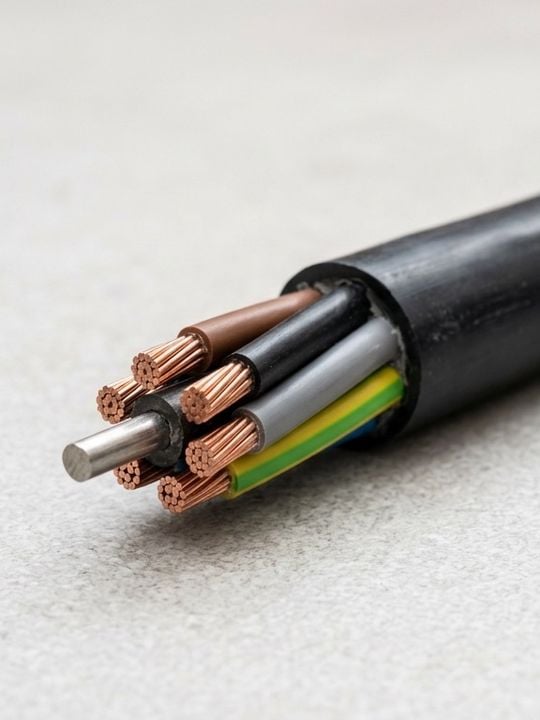
Power supply
Proper installation of underground cables at a depth of 60–80 cm, sized according to voltage requirements for safe and long-lasting power supply.
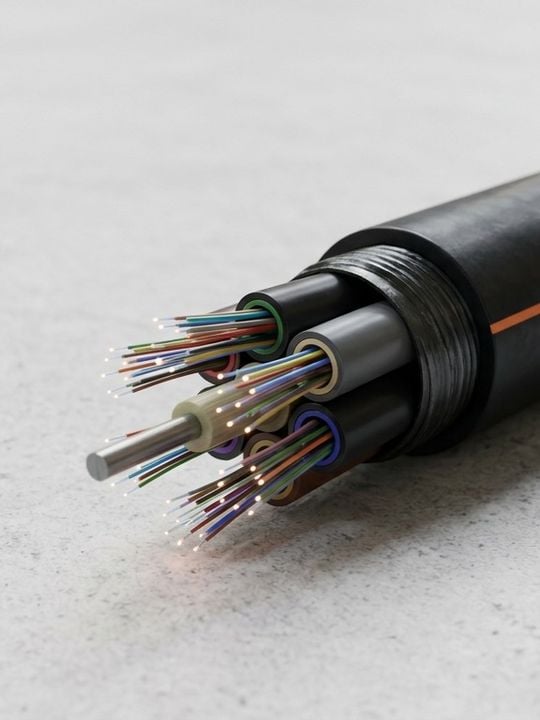
Fiber optics & telecommunications
Usually laid at a depth of 60 cm in protective empty conduits for fast data transmission over long distances with minimal line diameter.
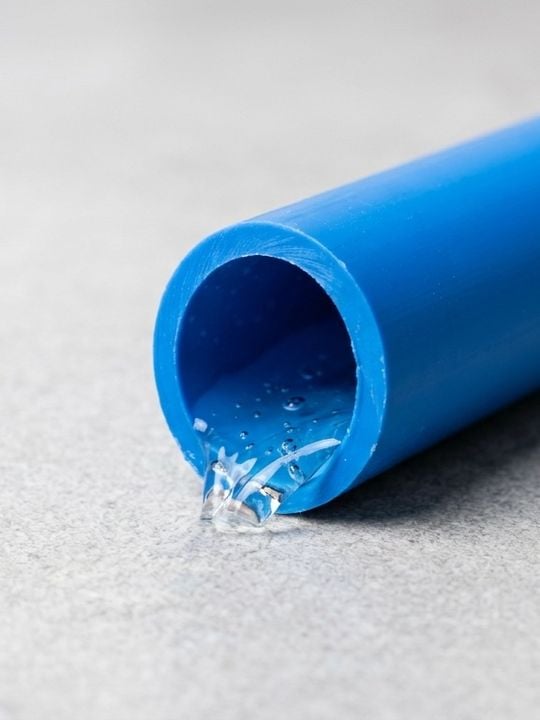
Drinking water pipelines
Frost-proof installation at a minimum depth of 1.20 m with robust PE pipes for a hygienic and pressure-resistant water supply.
Safety through clarity: What lies beneath the surface
We leave blind digging to others: Thanks to the latest software and digital plan information, we know exactly what lies beneath the surface even before the first shovel hits the ground. This not only saves you nerves but also prevents costly damage to existing power or gas lines, as we can plan the routing with pinpoint accuracy.
FAQ: Frequently asked questions about pipeline construction
Do I have to take care of the permits and plans myself?
No, we take care of that. We obtain the necessary line information from suppliers and use the software to determine where cables or pipes are already located so we can start safely and without delays.
How deep do the lines need to be at a minimum?
It depends on the medium: Fiber optics and power are usually laid between 60 and 80 cm deep. Water lines in Germany must be buried at least 1.20 m deep to prevent freezing, even in severe frost.
What happens if there is an obstacle (e.g., a rock) on the route?
Through our preliminary analysis, we often know in advance what to expect. However, if things get tough, we decide on-site whether to use heavy equipment or to slightly adjust the routing to keep costs stable for you.
Can different lines be laid in the same trench?
Yes, this is called multi-utility installation. It's often more efficient and cost-effective. We strictly adhere to the required minimum distances between different media (e.g., power and water) to eliminate mutual interference or safety risks.